 EN
EN  English
 中文简体
中文简体 русский
 Español
Home / News / Industry News / Helical vs Spur Planetary Gearbox: Which Delivers Lower Backlash and Higher Torque?


Application Industry
AGV

Automated robots
laser cutting

Logistics sorting

Photovoltaic power-station

Medical devices
Helical vs Spur Planetary Gearbox: Which Delivers Lower Backlash and Higher Torque?
When a robotic arm's end effector drifts by half a millimeter after a cold winter night, the first suspect is usually the encoder. But once you replace the encoder and the drift returns, the real problem often lives in the gearbox backlash. The same happens on rotary tables, indexing conveyors, and AGV steering axes: what looks like a control issue is actually a mechanical gap between motor and load.
For any precision drive that needs to combine low backlash with high torque, the reducer choice usually comes down to two architectures: helical planetary and spur planetary. After comparing both on our production floor and in field installations, the conclusion is clear. Helical planetary gearboxes deliver lower backlash and higher torque per frame size, and they do it without sacrificing a usable level of efficiency. Spur planetary gearboxes still have a place in cost-driven or efficiency-critical designs, but the gap in backlash and torque density is real and measurable.
Backlash: Where Helical Pulls Ahead
Backlash is the angular play measured at the gearbox output when the input reverses. It defines how far the load can rotate before the teeth on the driven side make contact. For a spur planetary gearbox, the teeth engage along a full line parallel to the gear axis. That makes the mesh structurally simple, but it also forces a minimum tooth clearance or the gears bind. On our SPE and SPF series, standard backlash ships at 10 to 15 arcmin, with ground premium versions reaching 5 to 8 arcmin.
Helical planetary gearboxes use teeth cut at a helix angle, typically 15 to 20 degrees. The mesh engages progressively from one tooth edge to the other. This rolling contact allows the teeth to nest more tightly. A standard FB series helical gearbox can hold 3 to 5 arcmin, and the FL low-backlash range holds 1 to 3 arcmin without needing a separate adjustable mechanism.
The visible consequence at the machine level is this: a 10:1 reducer with 12 arcmin output backlash translates into a 0.2 mm positioning error on a 150 mm arm radius. The same reducer with a 3 arcmin helical mesh produces under 0.05 mm. That difference is often the line between reworking a pallet and shipping it.
Typical Specifications at Production Level
| Parameter | Spur Planetary (SPE/SPF) | Helical Planetary (FB/FL) |
|---|---|---|
| Standard backlash | 10–15 arcmin | 3–8 arcmin |
| Precision backlash | 5–8 arcmin | 1–3 arcmin |
| Rated torque (same frame) | Baseline | 20–30% higher |
| Noise (1 m, no load) | 70–75 dB(A) | 62–68 dB(A) |
| Single-stage efficiency | 96–98% | 94–96% |
| Axial load at output | None | Present (needs thrust bearing) |
Zhejiang Saiya's FB and FL series helical planetary gearboxes are built for this lower-backlash, higher-torque window. They cover frame sizes from 60 mm to 220 mm and are available with standard or precision backlash ratings.
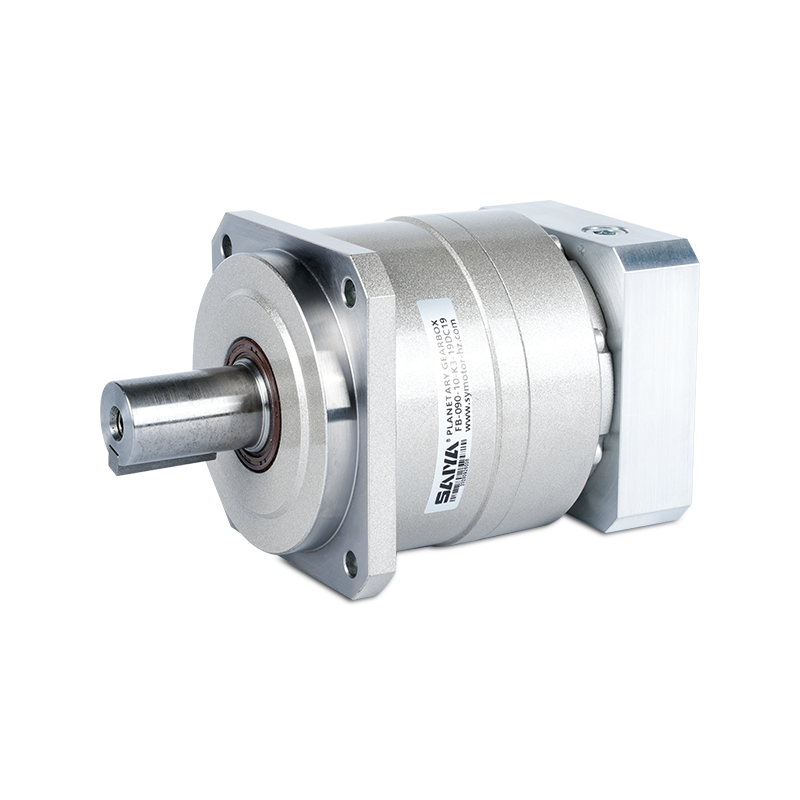 FB Series Helical Planetary Gearbox for Precision ApplicationsThe FB series offers square flange output and helical gears with reduction ratios from 3 to 100, and backlash of 3-5 arcminutes, suited for applications requiring accuracy and quiet operation.View Product →
Torque Capacity: How Helical Gains 20-30%
The torque advantage of a helical planetary gearbox comes from the contact ratio. In a spur mesh, one tooth pair carries the full load until the next pair enters engagement. In a helical mesh, the helix angle causes two or three tooth pairs to share load simultaneously. For a typical 20-degree helix angle, the contact ratio rises from about 1.8 to 2.4, distributing the driving force over a larger tooth surface.
In practice, that allows a helical planetary gearbox to rate 20 to 30 percent higher continuous torque than the equivalent spur unit with the same frame size. The benefit matters most in two cases.
The first case is variable load direction. A rotary table for a CNC machine reverses direction while the spindle is still cutting. A spur unit lets the load cross the backlash gap with an audible click, and the impact stress hits a single tooth root. A helical unit absorbs that reversal in a continuous rolling contact, which reduces the peak tooth stress and helps prevent pitting.
The second case is shock loads. When a conveyor suddenly overloads or a robot arm hits a stop, the shock propagates first through the gear mesh. The higher contact ratio of a helical mesh spreads that shock over more teeth, which lowers the chance of tooth breakage or rim damage.
The reason a planetary gear motor can achieve this high torque density in the first place is the way the sun gear, planet gears, and ring gear share the load. We have written a dedicated analysis of why planetary gear motors deliver higher torque than standard motors, covering the same load-sharing principle that applies to the gearbox stage. Helical tooth geometry increases it further.
Efficiency and Noise: The Trade-Off You Cannot Ignore
The same helix angle that improves backlash and torque also introduces sliding contact between teeth. That sliding generates more friction than the rolling contact of a spur mesh, so a helical planetary gearbox typically runs 1 to 2 percentage points less efficient than a spur unit of the same ratio. In a single-stage reducer, that means 94 to 96 percent efficiency compared with 96 to 98 percent for spur. For a multi-stage unit, the difference can reach 3 to 4 points.
On the noise side, the helical design wins clearly. The progressive tooth engagement prevents the sudden impact of full-width contact. In our measurements, a 42 mm helical planetary gearbox runs 6 to 10 dB(A) quieter than the equivalent spur unit at the same speed and load. That is the difference between a machine that can sit next to an operator and one that requires an acoustic enclosure.
For continuous-duty machines like packaging conveyors, energy consumption may dominate the decision. For precision machines in a medical device, a clean room, or a small workshop, noise often dominates. The right choice depends on which constraint is binding.
A Practical Decision Framework for Selecting a Planetary Reducer
Here is the decision routine our engineers use with customers. It starts from the machine, not the gearbox.
- Convert the end-effector positioning tolerance into an output backlash requirement. If your axis needs to hold 0.02 mm on a 150 mm arm, the output angular error cannot exceed about 7.6 arcmin. After dividing by the reducer ratio, a 10:1 reducer must keep output backlash below 0.8 arcmin. That eliminates virtually all standard spur units.
- Check the peak torque event. A 250 Nm continuous load with a 300 percent peak every reversal is a different problem from a smooth 300 Nm load. Helical planetary gearboxes tolerate the spike better because of the higher contact ratio.
- Verify the axial load budget. The helical mesh produces axial thrust, which the output bearing must handle. If you are retrofitting an existing servo motor with a thin bearing or a small flange, the extra axial load may require a larger thrust bearing or a flexible coupling. Spur units have no axial load, so they are safer for tight retrofits.
- Measure the installation envelope. A helical planetary gearbox is usually 5 to 10 mm longer than a spur unit of the same frame, because the thrust bearing needs space. If the machine envelope is already fixed, that small difference can outweigh the technical benefit.
- Compare the total cost, not merely the unit price. A helical unit may cost 15 to 25 percent more, but if it removes a 2-hour recalibration from the daily routine, the ROI is usually measured in months.
For projects where the positioning tolerance is under 0.1 mm and the torque profile is smooth, a spur planetary gearbox remains a dependable and economical choice. Our SPE and SPF series are routinely specified for packaging lines, sorting machines, and simple conveyor drives.
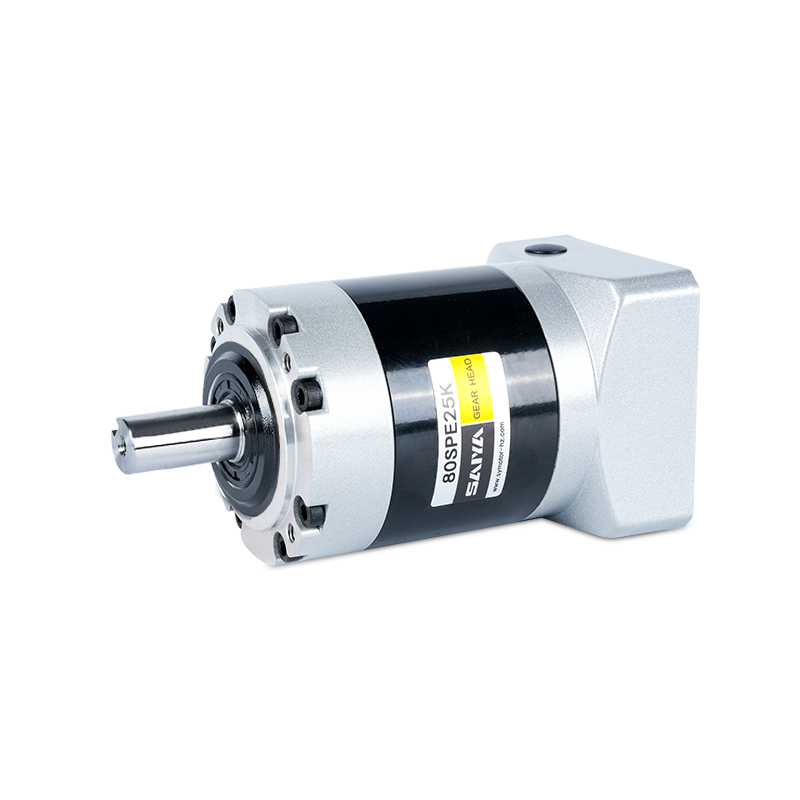 SPE Series Spur Planetary Gearbox with Round Output FlangeThe SPE series features a round output flange, power range from 50W to 7500W, and reduction ratios from 3 to 512, providing flexible and reliable solutions for diverse industrial needs.View Product →
When to Choose Helical, When to Choose Spur
Choose a helical planetary gearbox when:
- The spec sheet lists repeatability in micrometers rather than millimeters.
- The drive axis reverses direction frequently under load.
- Noise is a regulated or comfort requirement.
- The machine size cannot be increased but the torque demand can.
Choose a spur planetary gearbox when:
- The positioning tolerance is above 0.1 mm and the cycle rate is moderate.
- The budget is fixed and the duty cycle is continuous.
- You are retrofitting an existing machine with a minimal flange change.
- The priority is maximum energy efficiency over a long running day.
Both lists are legitimate engineering choices. The mistake is treating them as interchangeable, because the differences in backlash, torque density, and axial load are not trivial.
The Final Verdict
If your application needs low backlash and high torque together, a helical planetary gearbox is the safer specification. If your constraints are cost, envelope, or energy consumption first, a spur planetary gearbox still delivers dependable performance in a wide range of mid-precision machines.
The practical step before you choose is to compare the true motion profile with the real number on the reducer output flange. Our engineers review drawings and load data daily, and they can help you select a gearbox that matches your servo motor, your duty cycle, and your installation envelope. Contact us before you specify to avoid last-minute flange changes or field failures.
Related products
-
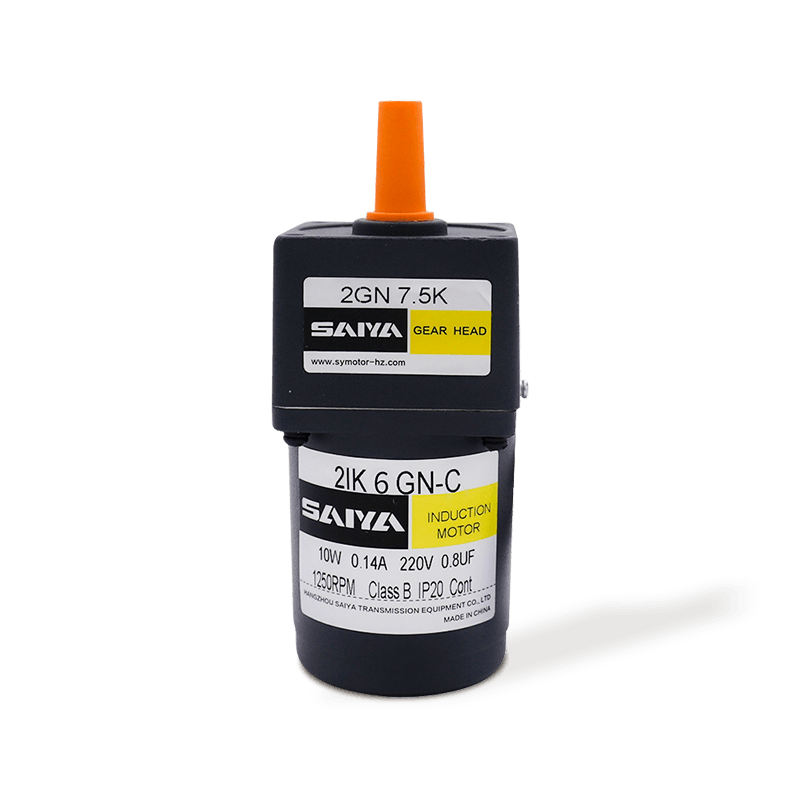
This 6W Induction AC Gear Motor is an efficient, compact and reliable small motor suitable for a wide range of industrial and household applications.Motor frame 60mm x 60mm making it easy to install ...
See Details -
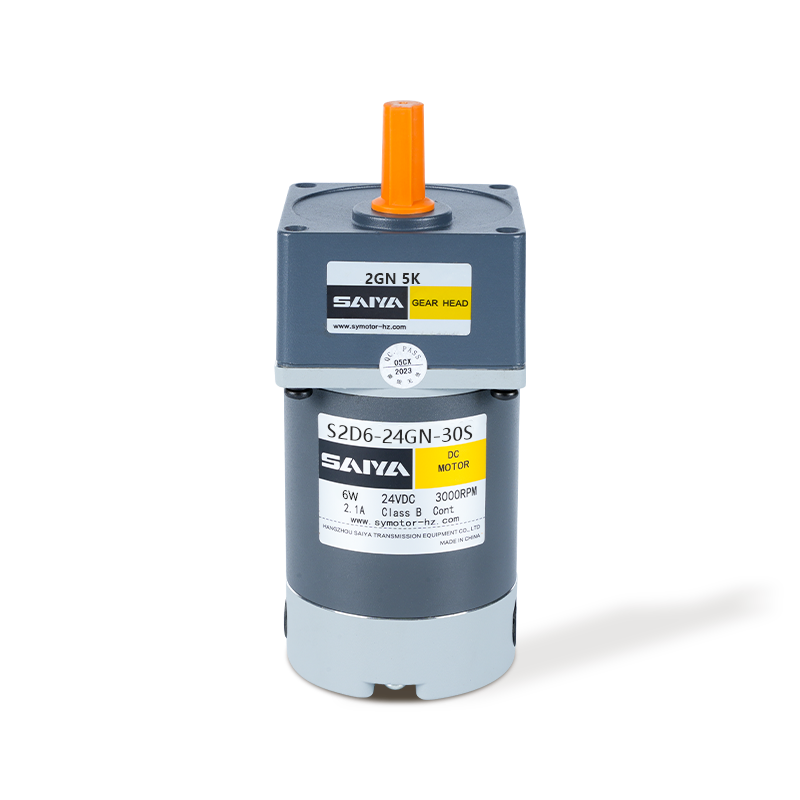
The 6W brush DC gbear motor is designed for efficiency and versatility, suitable for various applications. With a compact frame size of 60mm x 60mm, it fits seamlessly into tight spaces. The motor ope...
See Details -
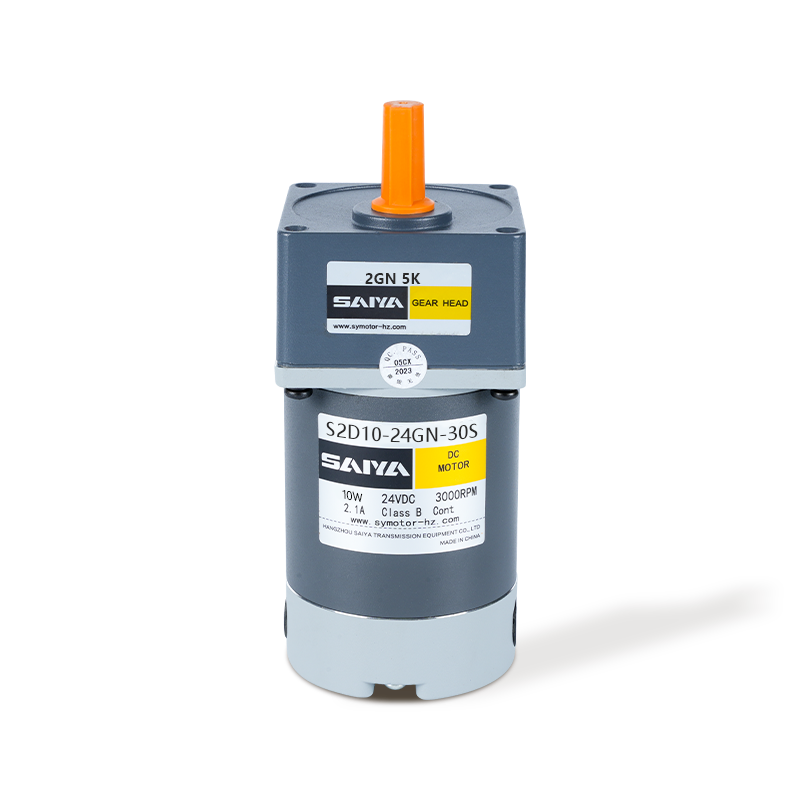
The 10W brush DC gear motor offers high performance and adaptability, for a range of industrial and hobbyist applications. With a frame size of 60mm x 60mm, this motor is designed to fit into confined...
See Details -
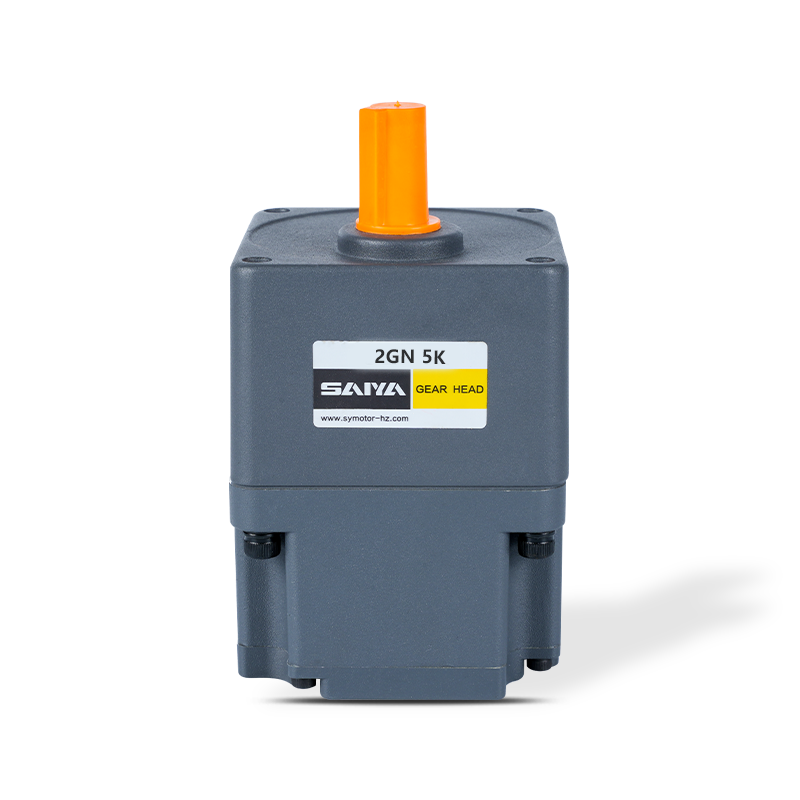
The 24V Brushless Gear Motor is a versatile and efficient motor designed for a range of applications. With dimensions ranging from 60mm x 60mm to 104mm x 104mm, this motor can fit into various equipme...
See Details -
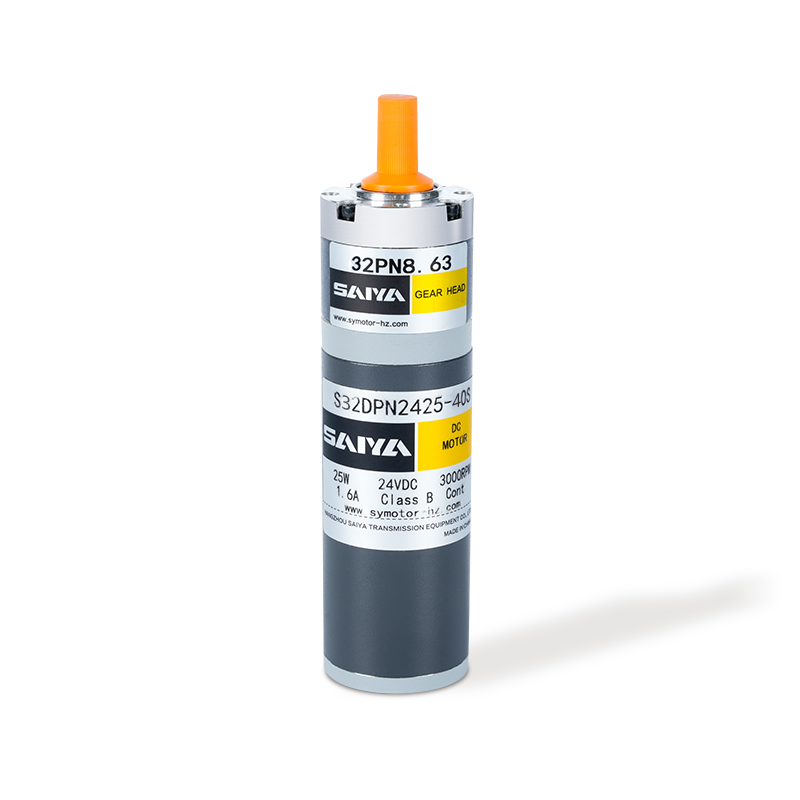
The 32mm brushed planetary gear motor is a compact and efficient solution designed for various applications requiring high torque and precise control. With a diameter of 32mm, this motor is ideally su...
See Details -
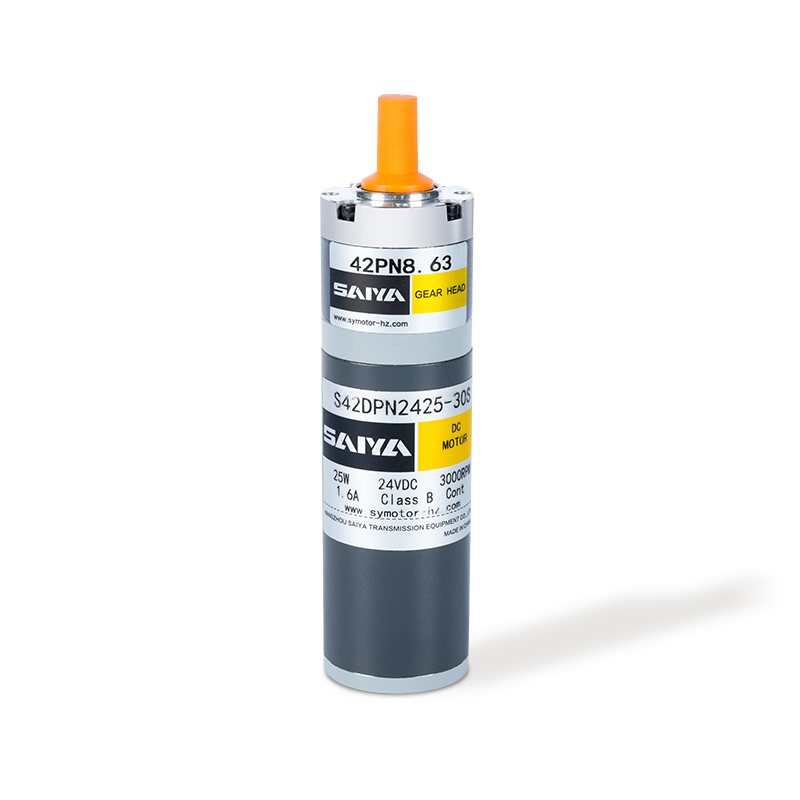
The 42mm brush planetary gear motor is a versatile and efficient component widely used in various applications requiring precise torque and speed control. With a rated current ranging from 0.7 to 1.1A...
See Details -
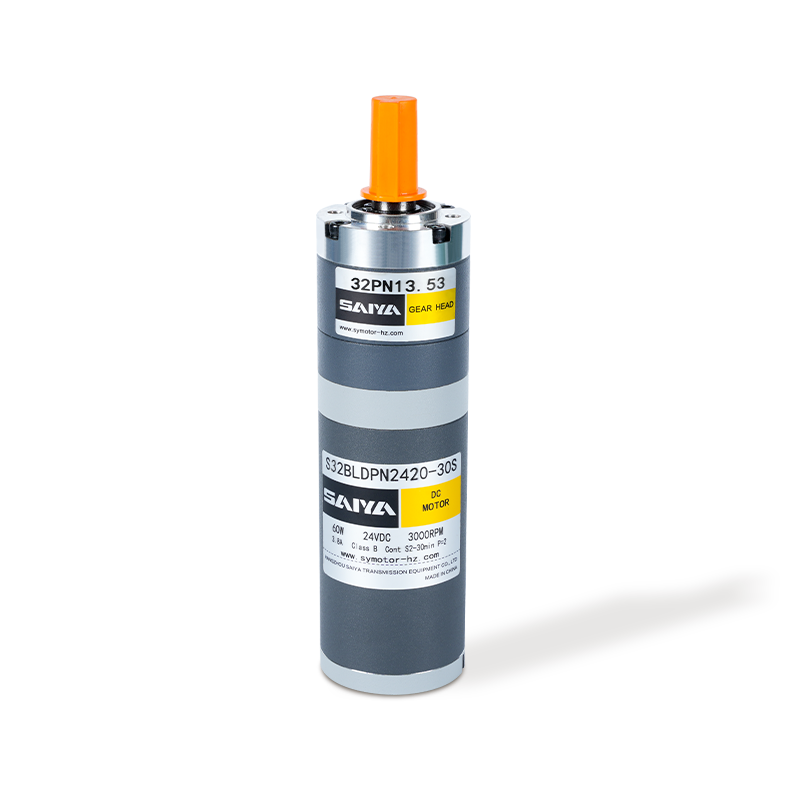
The 32mm Brushless Planetary Gear Motor is a high-performance, compact solution ideal for applications requiring efficiency and reliability. Operating at a rated voltage of 24V and consuming 20W of po...
See Details -
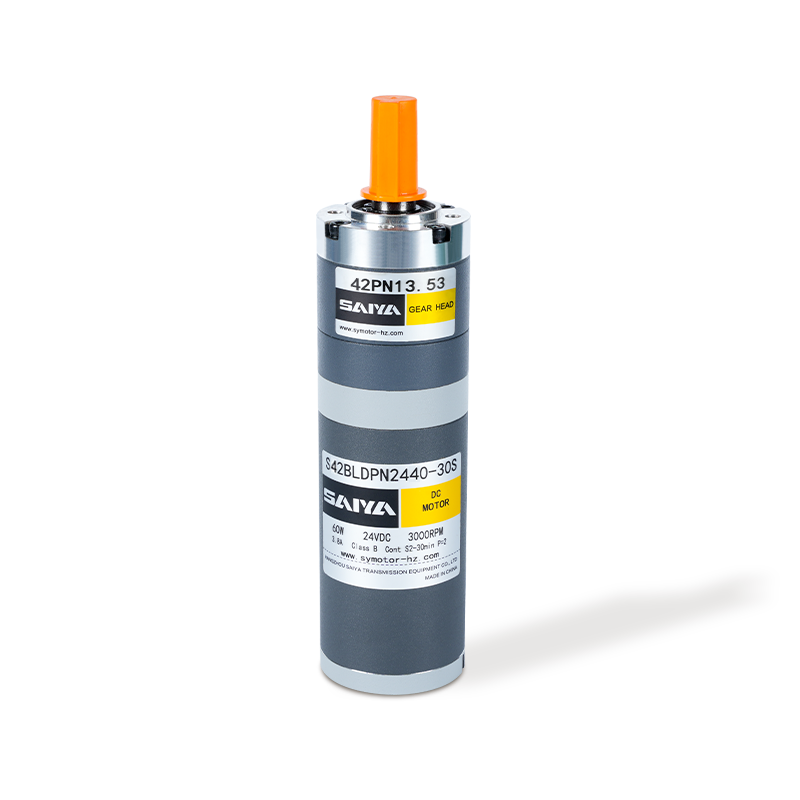
The 42mm brushless planetary motor is a high-efficiency motor product that is widely used in various scenarios requiring precision transmission. The rated current of this motor is 1.3A and the rated t...
See Details -
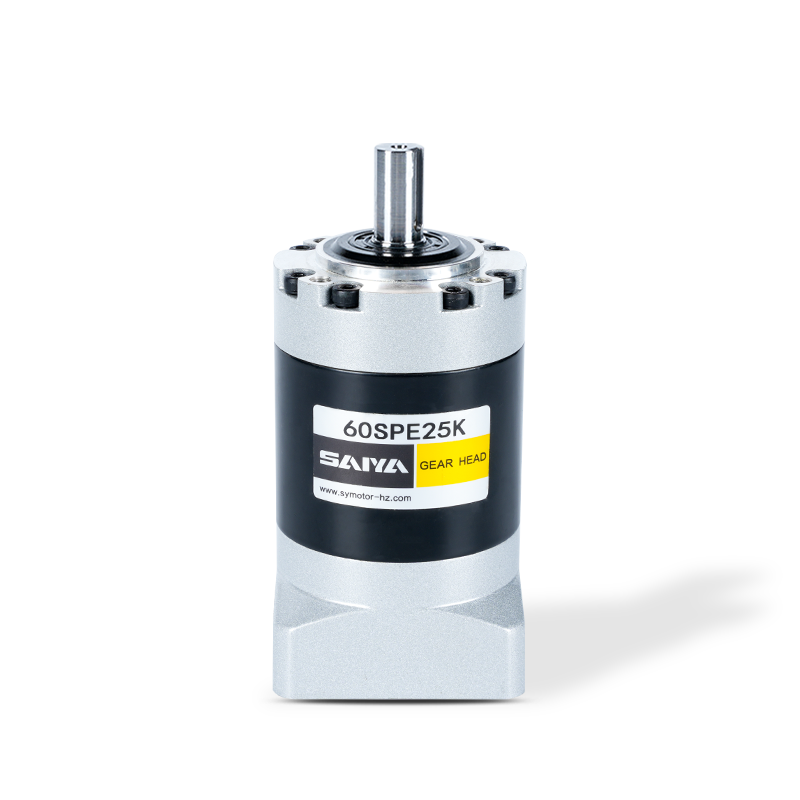
The SPE series gearboxes, flange size range with 40, 60, 80, 120, and 160 models, are designed to provide efficient and robust power transmission solutions. These gearboxes feature a round output flan...
See Details -
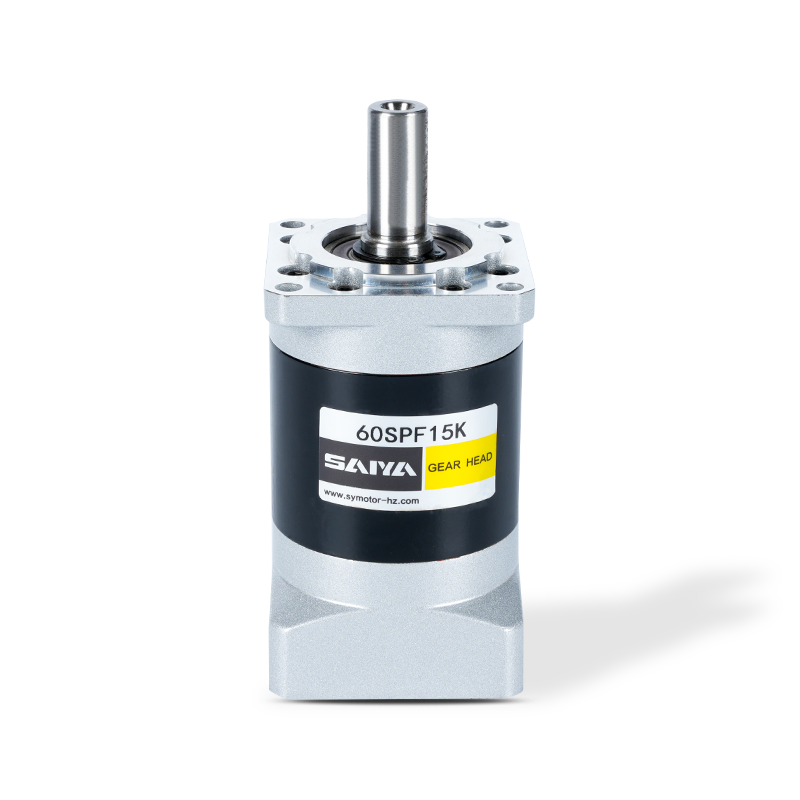
The SPF series are with square output flanges, accommodating dimensions from 40mm to 160mm. These flanges are engineered to excel in various industrial applications, offering reliable performance acro...
See Details -
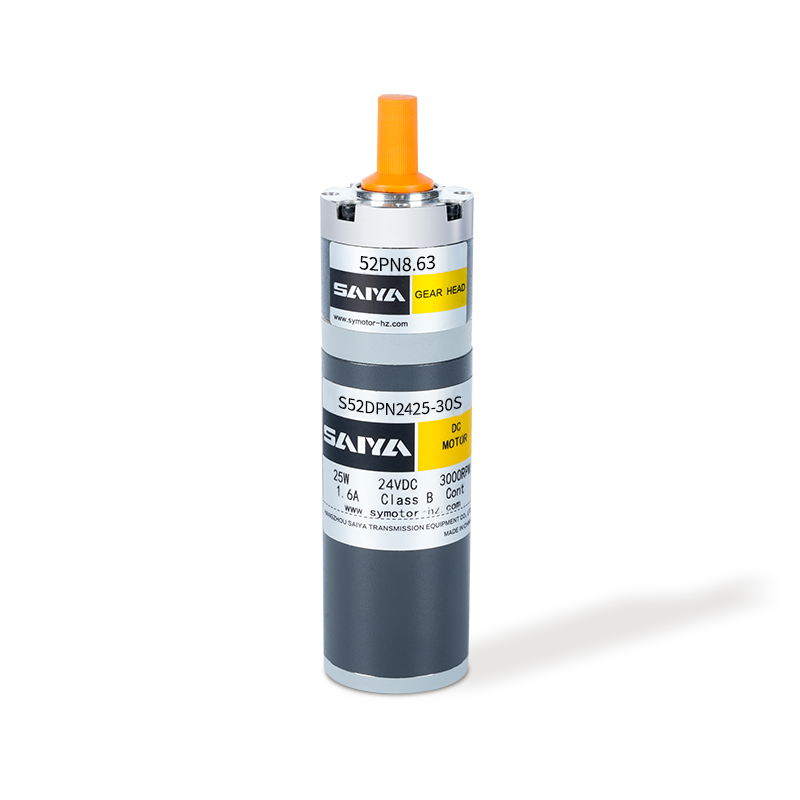
The 52mm brushed planetary gear motor is a compact and efficient solution designed for various applications requiring high torque and precise control. With a diameter of 52mm, this motor is ideally su...
See Details -
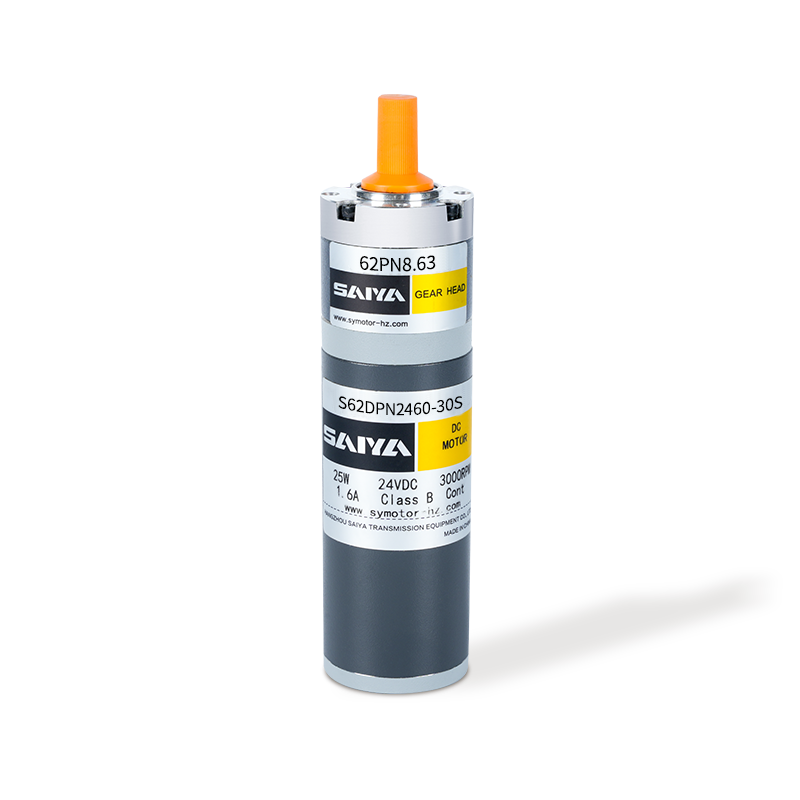
The 62mm brush planetary gear motor is a versatile and efficient component widely used in various applications requiring precise torque and speed control. With a rated current ranging from 2.5 to 5.5A...
See Details
CONTACT DETAILS
- TEL: 0086-0571-86951513/86951543
- Fax: 0086-571-86040769
- E-mail: [email protected] / [email protected] / [email protected]
- Office: Hangzhou Saiya Transmisson Equipment Co.,Ltd
- Office Address: Room 2201, Wanyin building, Hangzhou City, Zhejiang Province
- Factory: Zhejiang Saiya Intelligent Manufacturing Co., Ltd.
- Factory Address: No.35 Building , Zhongnan High-tech Yunhe Zhigu Industrial Park, Xinan town, Deqing county, Huzhou city, Zhejiang, China
QUICK LINK
PRODUCT
If You Are Intrested
In Our Products,
Please Consult Us
Copyright © Zhejiang Saiya Intelligent Manufacturing Co., Ltd. All Rights Reserved.
Custom Gear Reduction Motors Suppliers
